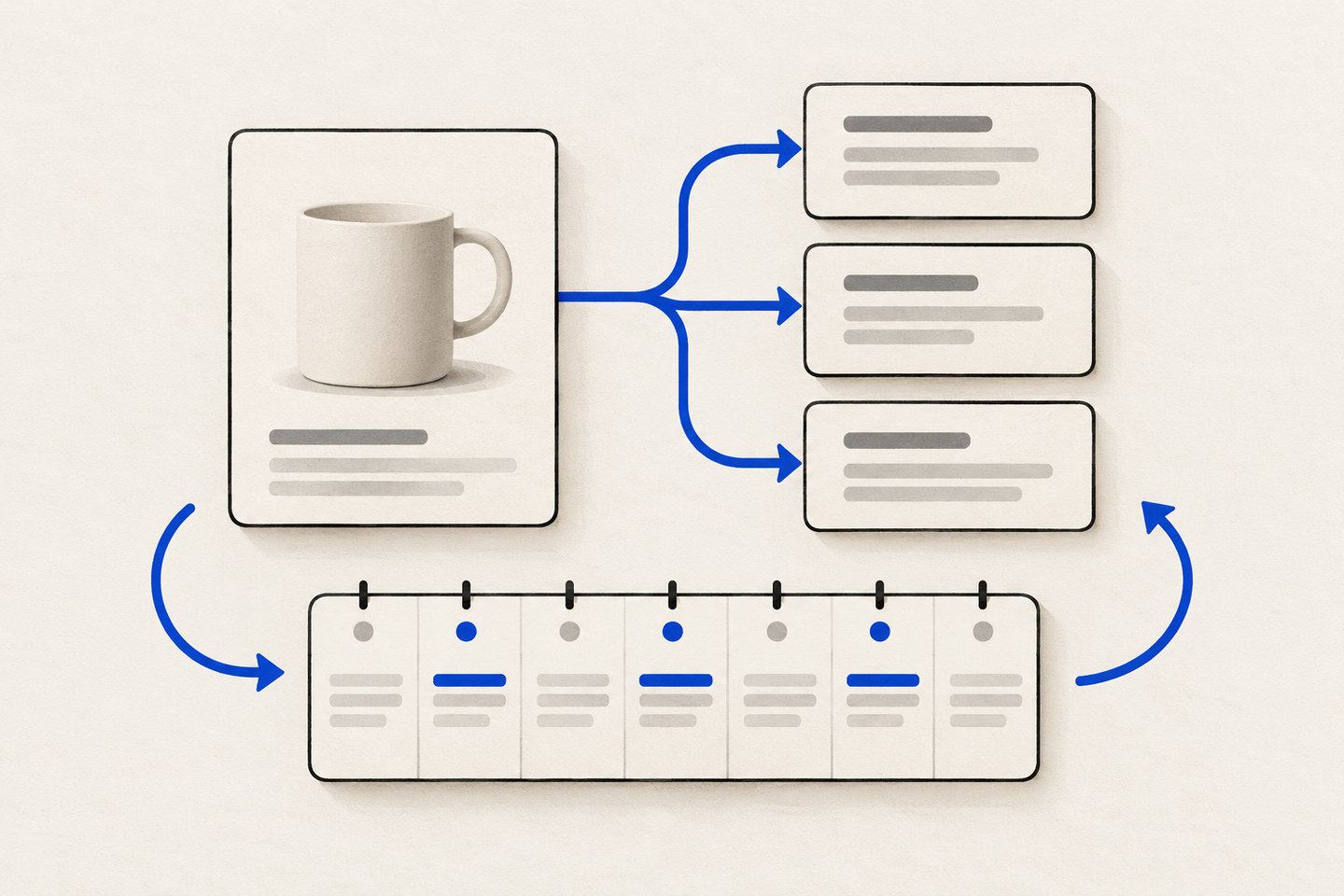
On October 9, 2026, Shopify announced weekly translation sync in Translate & Adapt. For eligible stores, the AI translation allowance rises from two to eight languages in addition to the store’s default language.
Who can use eight languages
Updated November 9, 2026. On October 27, Shopify expanded the feature to the United States and Canada. This extends the October rollout; it is not a new November launch.
Shopify’s current help page lists the United States, Canada, Austria, Belgium, Denmark, France, Germany, Ireland, Italy, the Netherlands, Spain, Sweden, Switzerland and the United Kingdom. Ukraine is absent. However, its help page says the Translate now button signals access to eight languages and Auto-sync even outside that list. Other stores retain two additional languages without Auto-sync.
How sync works
Auto-sync is off by default and enabled separately for each language. It runs weekly for published languages; the first run after publishing can take up to a week. Translate now starts translation sooner, but large stores may need several hours.
Manual translations and edits are preserved. Some theme text receives only missing translations. Removing a language does not free its used allowance; store legal policies cannot be translated automatically.
What a small shop should check
For a small shop, start by checking access and choosing one language customers already use to contact you. Review delivery details, sizes and product specifications before publishing. Recheck your manual edits after later changes to the original: preserved wording can also become outdated.
Read also: where human review is needed and how to set data boundaries.
Takeaway: the feature can help stores maintain multiple language versions, but automatic sync does not replace translation accuracy checks. Nadali has not tested it in a working store or measured time savings.
Author: Nadali. Prepared using AI. Sources checked November 9, 2026. Cover: a conceptual AI illustration, not the Shopify interface.