By Nadali. Prepared with AI assistance.
A bag with the right number is on the pickup shelf. The courier leaves with it. A minute later, someone by the refrigerator finds the second bag for the same order. The first bag was correctly labelled, but the order was marked ready before anyone checked that the whole set was there. These are two different checks: before sealing, check the contents; at pickup, match every bag to the specific order.
This workflow is for restaurants where the kitchen packs orders and the counter hands them to guests or couriers. It does not replace food-safety procedures, temperature and allergen controls, or required information for customers.
Before sealing: check the contents against the current ticket
- Open the current ticket or order record. Work on a clean surface and assemble one order at a time. Check the items, quantities, accepted modifications and paid extras. Check small items such as a sauce or drink the same way you check a main dish. If the printed ticket and the screen disagree, do not guess. Someone with access to the ordering channel should confirm what the restaurant actually accepted.
- Check that the containers close properly. Use packaging suitable for food contact and for the dish it contains. A lid should fit all the way around; keep a soup or sauce container upright. If a package leaks, set it aside and determine whether replacing the container is sufficient or whether your food-safety procedure requires a different action. A dry outer bag does not fix the problem inside.
- Label every bag before you mark packing complete. Write the permitted identifier, channel and this bag’s position and the total count, for example, “A · 042 · 1 of 2”. Record where each part will wait. Keep hot and chilled items in the appropriate holding conditions under your food-safety plan, rather than putting everything on the counter for convenience. The code does not replace a dish label, allergen information or a receipt. If the order changes after sealing, send it back for rechecking rather than writing a correction on the outside of the bag.
The UK Food Standards Agency explains why delivery businesses should pack securely, maintain appropriate temperatures and prevent cross-contamination. Ukraine’s State Service on Food Safety and Consumer Protection separately points to suitable packaging and clean transport containers. Follow the rules in your jurisdiction and your approved procedures for your food and sales channel. If allergen information or food safety is uncertain, do not release the dish until the responsible staff member confirms it can be handed over. A sticker is not a fix.
At pickup: match the code, channel and every bag
Ask the guest or courier to say or show the code using the method your ordering channel requires. Match it to the active order, not just to the number on the nearest bag. If two channels use the same short number, add the channel or a unique internal reference to your own bag tag. Keep any required platform label separate. Your tag does not need the guest’s name, phone number or address.
The counter worker collects all parts from their recorded locations, checks that the tags read “1 of 2” and “2 of 2”, not “1 of 2” twice, and looks for damage or signs the bag has been opened. Mark the order handed off in your own system only after the transfer, not when the food is cooked or the bags sealed. If a bag is missing, the code does not match or the packaging is damaged, put the order on hold in your internal queue. Keep it in its proper holding conditions and tell the packer why it is on hold. A seal alone does not prove the contents are correct. Uber Eats’ merchant guidance recommends using seals that show signs of opening only when packing is complete, then separately checking at handoff that the right courier gets every bag. That is one platform’s guidance, not a rule for every restaurant.
Example: two orders numbered 042, but only one is complete
In this fictional restaurant, channel A’s order 042 is soup and a chilled dessert. Channel B also has an order 042: one bag with a sandwich. The counter has “A · 042 · 1 of 2” and “B · 042 · 1 of 1”, but no one has packed “A · 042 · 2 of 2” yet. The courier shows the order from channel A. The worker sees 042 on both bags, but they are not a pair. The worker does not hand over a partial order, take channel B’s bag or mark A’s order handed off. The packer checks the dessert against the current ticket and, once packed, keeps it in its designated holding area until pickup. When both parts of channel A’s order are ready, the counter checks and hands them over together.
Run a drill without using real orders
Before a shift, run through this case with clean empty containers, dummy tickets and a separate test list, not the live till. Give another team member the “A · 042” ticket and deliberately leave “A · 042 · 2 of 2” out of the pickup staging area. A pass means they hand over none of channel A’s bags while one is missing and can say why. Then add the correct bag and repeat the handoff.
During a real shift, count errors caught before release separately for contents, packaging and missing or mismatched bags. Record only the permitted code in the log, the category, the action and who closed it. The number of errors caught at the counter does not tell you how many reached guests. Review complaints after handoff separately. If the second bag is often missing, start by moving the ready signal to after someone has checked the whole set.
Related: how to trace a food lot from receiving to dispatch. That is a separate task: a lot code tracks where the food came from, while an order code helps you hand over the correct set.
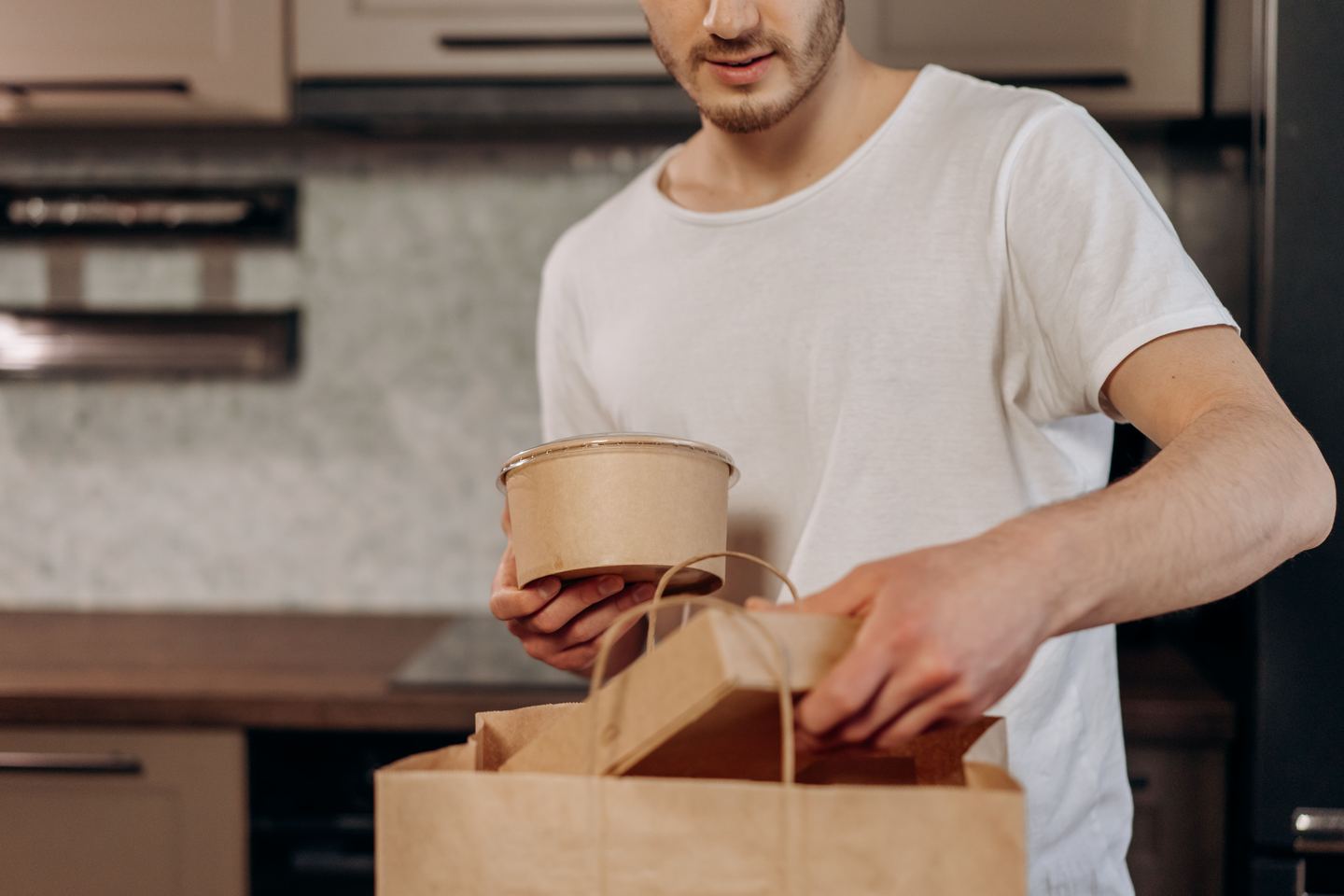
Cover: illustrative stock photograph, not a photograph of the check in a restaurant.