Author: Nadali. Prepared with AI assistance.
What launched
On November 10, 2026, ElevenLabs introduced Scribe v3 for recorded audio and Scribe v3 Live for live streams. Both models are available through the API; Live is also in ElevenAgents and adds speaker diarization to this realtime model line for the first time. For teams preparing conversation summaries, this is a reason to check both the words and who they are attributed to.
The company reports improved accuracy in its own tests. Nadali has not tested the models and does not treat those results as evidence for a particular business’s Ukrainian conversations.
Recognition prices and the full cost
The public API pricing page lists Scribe v3 at US$0.20 per audio hour and v3 Live at US$0.22, excluding taxes. Keyterm prompting and transcript editing carry separate charges; a keyterm library is also listed separately for Live. These are recognition prices, not the full cost of a voice agent, integration or human review.
Before a pilot, ask the responsible person to estimate the cost of your actual workflow. Compare the cost of an accepted transcript, including corrections, rather than only an hour of processed audio.
The web app does not automatically guarantee zero retention
The Zero Retention Mode documentation specifies that the mode is available to select enterprise customers, applies only to eligible API requests and never covers web UI traffic. Input audio and output text retention are enabled by default. The Scribe v3 name alone does not establish that a recording will not be retained.
Before uploading work audio, establish which processing route the team uses, who has access and what retention periods have been agreed. Check permission to record the conversation and share it with the provider; prepare a staged recording without customer data for the first test.
A short check before use
Nadali’s suggested review process:
- With the participants’ permission, record a short fictional conversation with two or three voices. Include a pause within a number, similar names and one change to an agreement.
- Prepare a reference transcript manually. Separately mark the speaker, number or date, and final agreement.
- Compare the transcript with the audio. Count word errors and speaker assignment errors separately: a correct sentence beside the wrong name can still spoil a summary.
- Check the next step: whether the transcript produces the correct task. Do not send it to a customer or trigger an action until the responsible person confirms the content.
- Record the model, processing route, retention settings, costs and human review time. If the result fails your criteria, keep preparing the summary manually.
Illustrative example: in a training conversation, a manager proposes another delivery time and the buyer rejects it. Swapped speaker labels could turn a refusal into apparent agreement. This is an editorial illustration of a risk, not a Scribe error we observed.
Sources read on November 11, 2026. We did not check access in a specific account, Ukrainian audio quality or actual data deletion. A model appearing in a list does not replace checking your workflow.
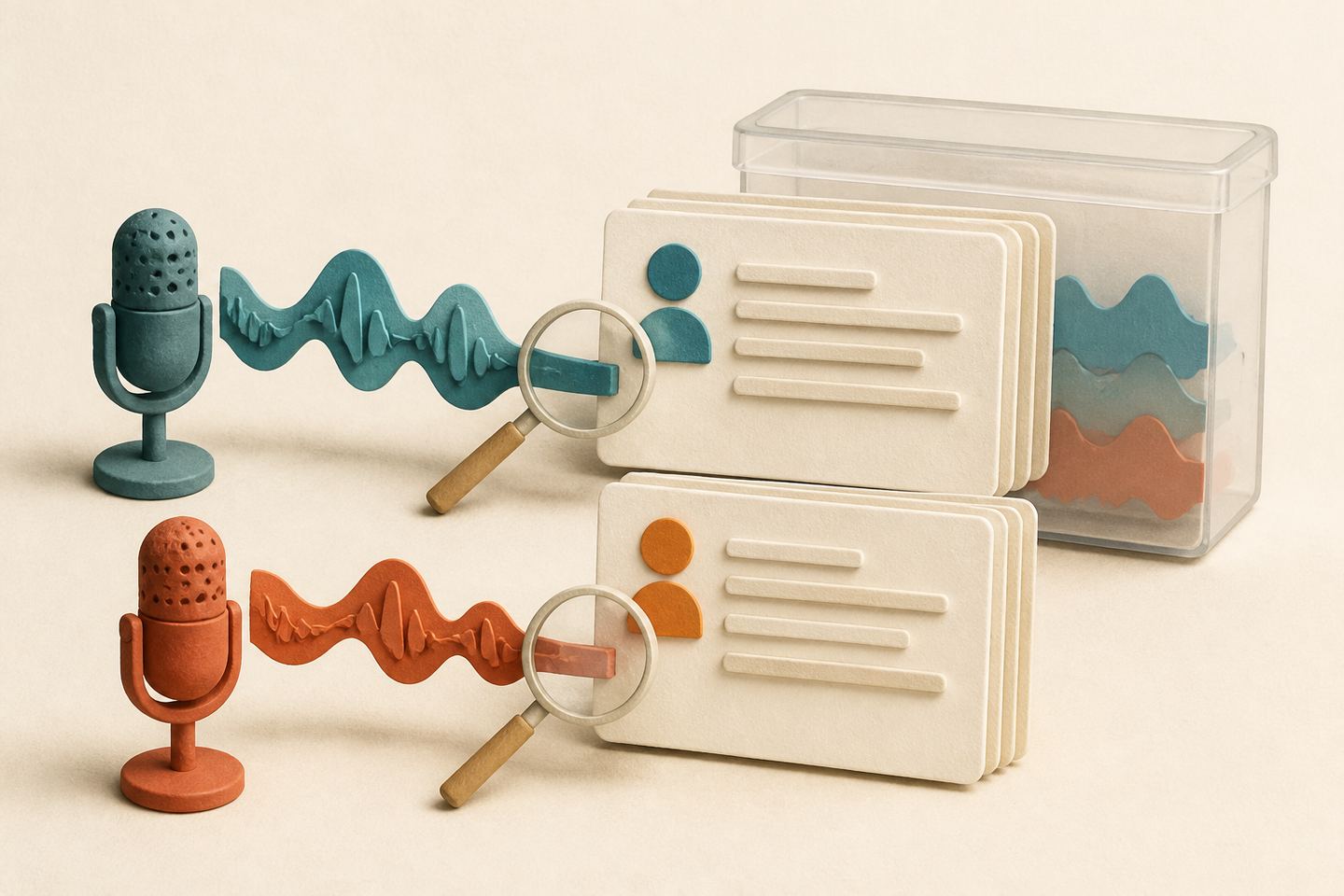
Cover: an original conceptual AI illustration for this article, not an ElevenLabs interface or a test result.