Author: Nadali. Prepared with AI assistance.
The driver brings ten cases and the delivery note also says ten, but the kitchen ordered a different pack size. Matching counts do not establish that the restaurant received the products it needs. AI’s useful role is not to “accept the delivery” but to prepare a clear list of differences between the order, documents and employee’s record.
This guide is for restaurant managers, buyers and receiving staff. It proposes an editorial workflow for a small pilot, not a tested system or legal instruction. Unlike a stock count, it checks a particular delivery rather than the entire storeroom balance. Payment approval remains a separate process.
1. Do not replace physical receiving with a document
A delivery note states what the supplier recorded. An order states what the restaurant expected. A separate employee record describes what was counted and inspected on site. Filling all three columns from the delivery note would merely corroborate one source with itself.
The UK food-business guide recommends checking deliveries against orders, inspecting packaging and ensuring chilled and frozen food is sufficiently cold. This is UK guidance, not an interpretation of Ukrainian requirements. Trained staff perform specific safety checks, determine storage conditions and decide what to do with products under the establishment’s procedures.
AI cannot establish food safety from a scan or a case photograph. Do not delay necessary safe handling while uploading files. Where a documentary discrepancy concerns goods, a responsible person determines their status and handling, not the model.
2. Assemble three independent records
For the first pilot, choose one delivery of packaged products and an existing approved spreadsheet. A new paid system is not required. Preserve originals and versions; do not rewrite the order to match what arrived.
| Record | What should be visible |
|---|---|
| Order | ID, date, line, product code, approved pack size, quantity and unit |
| Delivery note | Number, date, order reference, line and declared quantity |
| Actual receiving record | Delivery ID, time, employee, observed code and pack, counted quantity, comments |
| Decision | What is confirmed, what remains open, who approved the next step |
Do not automatically copy the document into the actual receiving record. If an employee has not counted an item, its cell should say “not checked”, not contain the quantity from the delivery note.
Before sending data to AI, remove unnecessary bank details, personal contacts and commercial terms. Retain internal codes and permitted source references. Use only a service approved for these data, without permission to change records, purchase goods or send claims.
3. Compare the same products and units
The BCcampus purchasing textbook includes package size and units per case among product specifications. In this workflow, that supports keeping pack information separate from a short product name.
Do not merge “cream”, “cream 1 litre” and “plant-based whipping product” because their descriptions look similar. A person approves the mapping between supplier and internal codes. Unknown codes and changed packs enter a clarification queue.
Case conversion needs a confirmed factor for the current delivery. Keep both values: “4 cases of 6 packs” and “24 packs”. Verify arithmetic with spreadsheet formulas. Do not convert kilograms to litres or net weight to gross weight without the necessary data.
Even matching total weight does not establish equivalence. Twelve 400 g cans and eight 600 g cans both total 4.8 kg but are different packs; the sum does not decide acceptability.
4. Record partial deliveries as events, not replacement numbers
An order line may arrive across multiple deliveries. Each therefore needs its own ID, and another copy of a delivery note must not create another receipt.
All data below are fictional. Order P-41 requests 48 packs of T-08, with six packs per case.
| Event | Physically recorded | Confirmed accepted for this example |
|---|---|---|
| Delivery D1 | 5 cases × 6 = 30 packs | 30 |
| Delivery D2 | 3 cases × 6 = 18 packs; employee rejects 2 | 16 |
| Total | 48 delivered | 46 accepted |
Under these assumptions, the outstanding order quantity is 48 − 30 − 16 = 2 packs. This is neither a new purchase nor an automatically approved demand to the supplier. The two rejected packs need a separately agreed decision: replacement, an order change or another action under the parties’ agreement.
If D2’s note states 18, AI should report a difference between 18 declared and 16 accepted, not “correct” the receipt to 18. A second copy of D2 does not add another delivery or change the confirmed totals: 48 delivered and 46 accepted. If the rejected two packs remain physically on site, record their location and status separately under the established procedure; being in the building does not make them available for use.
5. A similar name does not approve a substitution
A supplier may deliver a different brand, composition or pack. The model can flag the difference but cannot approve using the substitute. “Awaiting a decision” must remain visible to the kitchen and buyer.
GOV.UK’s allergy guidance connects delivery checking with verifying ordered products and updating information after ingredient changes. The operational takeaway is that closing delivery paperwork does not establish that kitchen and guest information is current.
When a product changes, the responsible person checks the current label or specification and its implications for established processes. Do not ask AI to determine allergens or guarantee that a substitute is suitable. Related menu wording needs a separate ingredient and translation review.
6. Give the model a narrow assignment
Compare the supplied order, delivery notes and independent actual receiving log. Work by order, line and delivery ID. Return the source of each value, original unit, confirmed conversion factor, discrepancy and question for a person. Do not guess codes, pack sizes or unknown quantities. Separate delivered, accepted, rejected and outstanding quantities. Flag possible duplicate document copies but do not delete records. Do not decide food-safety, allergen, payment or claim issues. Do not change or send anything.
Check the output against originals. Sample rows marked “match” as well; otherwise, you inspect only the errors the tool itself highlighted. An unclear number, missing page, unknown pack size or unresolved partial delivery stops the conclusion for that line.
7. Close the decision, not just the spreadsheet
A completed line records the authorised person’s decision, date, supporting document and reference to any approved correction. Preserve original values. Changing a receiving record after review requires a new reconciliation version; the previous AI conclusion is no longer final.
During the pilot, count staff time including verification, missed and false alerts, open questions and cases of counting a delivery twice. Do not call every difference a saving: it may be a legitimate partial shipment or an extraction error.
Bottom line: the useful output is a traceable record of a particular delivery with a separate human decision for each exception. AI helps compare records; it does not confirm physical condition, accept a product or approve payment. Nadali has not tested this workflow in a restaurant. Sources read November 15, 2026.
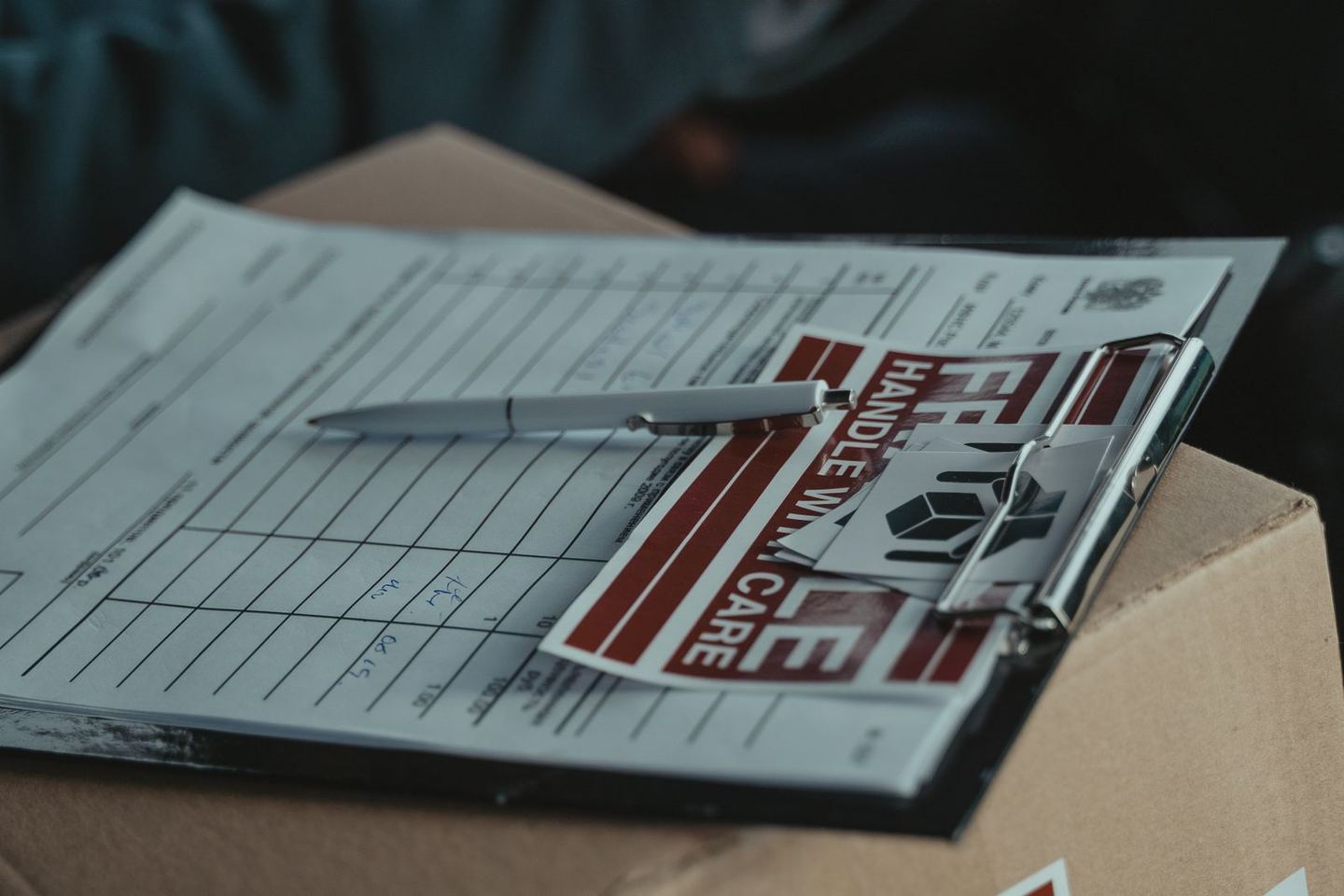
Cover: illustrative stock photograph, not a photograph of the described event or evidence of testing.